


The Center for Accessibility and Learning Services provides an affirming and collaborative experience for students seeking accommodations or other academic/campus life supports while at Chestnut Hill College. At Chestnut Hill, we provide a welcoming community that celebrates students who learn and think differently while supporting and empowering all students to reach their full and unique potential throughout their college journey.
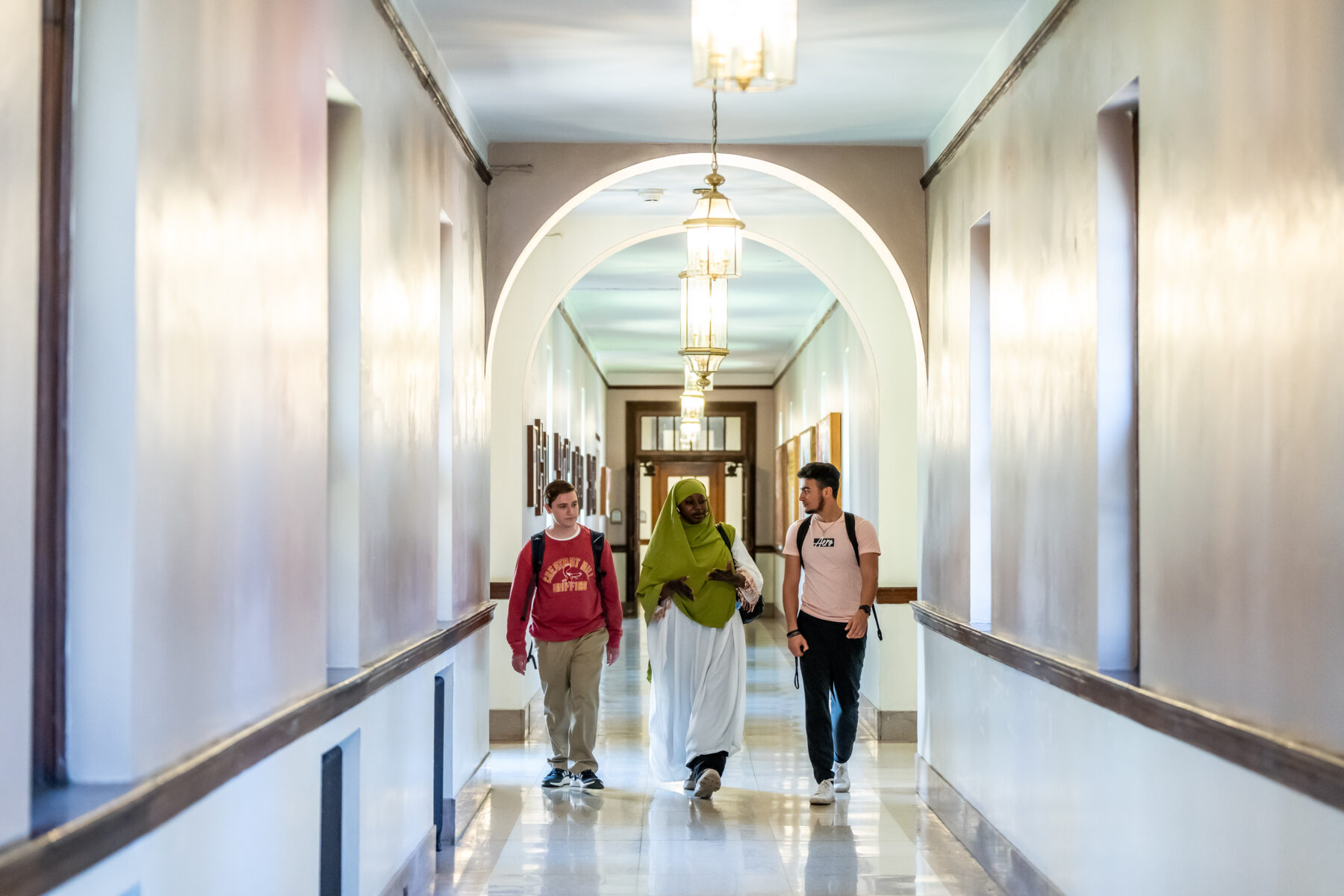
Center for Accessibility and Learning Services
Process for Receiving Disability Status at CHC
To fully participate in academic, extracurricular, and campus life activities at Chestnut Hill College, students may require reasonable accommodations for accessibility. Chestnut Hill provides equal opportunities for students with disabilities in accordance with federal, state, and local laws (Section 504 and ADAAA). Students with disabilities who need accommodations for equitable access and opportunity to this learning environment are encouraged to disclose their disability. We are dedicated to ensuring that qualified students with disabilities are provided with reasonable and appropriate accommodations. CALS engages in an interactive, student-centered process with each registered student who discloses a documented disability.
According to the ADA, an individual with a disability is defined among three categories:
- someone with a physical and/or mental impairment that substantially limits one or more major life activities of an individual
- in conjunction with the broadening of what constitutes a disability, the ADAAA adds a non-exhaustive list of “major life activities.” The list is expansive and includes, but is not limited to, the activities of “caring for oneself, performing manual tasks, seeing, hearing, eating, sleeping, walking, standing, lifting, bending, speaking, breathing, learning, reading, concentrating, thinking, communicating and working.” The Act also provides that a major life activity includes the operation of a “major bodily function.” The new law expressly includes the functions of the immune system, normal cell growth, digestive, bowel, bladder, neurological, brain, respiratory, circulatory, endocrine, and reproductive functions as major bodily functions. The list is not exhaustive. Any of these bodily functions and others, if substantially limited, will bring an individual within coverage of the law.
- OR a record of such an impairment
- OR being regarded as having such an impairment.
In addition, the ADA Amendments Act of 2008 extends the definition of disability to include, “episodic or in remission if it would impair a major life activity when active.”
How to Apply for Accommodations at Chestnut Hill College
Contact the Center for Accessibility and Learning Services to obtain a packet to request accommodations. There is no deadline for an application, but students are encouraged to reach out and complete necessary documentation as early as possible. Any housing accommodations are based on availability, as there are a limited number of single rooms, suites, and air-conditioned rooms. Housing and service/assistant animal forms can be found below.
Types of Accommodations and their Respective Forms
Academic and/or Medical Accommodations
Accommodations that fall under this category include emotional, allergies, physical, dining, mobility on campus, etc.
CALS Disability Intake Documentation
CALS New Student Instruction Letter, Fall 2026
Housing Accommodations
Housing Accommodation Request Form
Students with medical needs who require special housing accommodations in on-campus residence halls may request such accommodations by completing the required documentation and securing appropriate documentation from a licensed medical or licensed mental health professional.
Housing accommodations are intended for students with a qualifying disability that substantially limits their ability to function daily in a dorm room and residence hall. The accommodation is not based solely on a diagnosis but on how the student’s disability directly interferes with one or more major life activities that the student would experience in a residential setting. The student must currently be in treatment with a licensed medical or licensed mental health professional.
CALS will review the documentation to determine whether the requested accommodations are reasonable. Accommodations will be developed to meet the student’s medical needs and/or mental health needs and ensure their equal access to college housing.
All housing accommodation requests and approvals are contingent upon available space. While CALS engages in the interactive process and collaborates with housing to implement approved accommodations, neither CALS nor housing can guarantee the availability of a specific room type or location. Furthermore, the number of air-conditioners if requested is limited. If the approved accommodation cannot be immediately met due to space limitations or number of items, housing will explore alternative options on campus to help meet the student’s needs to the greatest extent possible and/or place the student on a waiting list until the requested space or item is available.
Please note, it is important to get your accommodation request in as soon as possible in order to help the college meet any specific needs.
- Assignment to a specific residence or roommate is not an accommodation
- Number of single rooms is extremely limited
- Access to shared bathrooms is extremely limited
- There are no private bathrooms
- Number of air-conditioners is extremely limited
Service and Assistance Animal Accommodations
In accordance with Section 504 of the Rehabilitation Act of 1973, the Americans with Disabilities Act of 1990 (ADA) and its amendments, and the Fair Housing Act (FHA) of 1968 and 1988, Chestnut Hill College is committed to accommodating individuals with disabilities who require the assistance of a qualified service or assistance animal. The animals must meet the definition of either service animals or assistance animals. If they do not meet the definition under these regulations, whether wild or domestic, they do not qualify. This policy does not include pets as they are not classified as service or assistance animals. Pets are not allowed on the college campus, housing, or property in accordance with the Student Code of Conduct.
For All Accommodation Requests
The College reserves the right in all cases to require additional documentation. The Director of the Center for Accessibility and Learning Services will contact the student either by e-mail or phone if more documentation is required. In addition, she/he or a designee may also contact specialists listed on the Release of Confidential Records form for additional information or clarification of information.
The completed forms including any supporting documentation can be submitted to CALS as indicated above. Please be aware that the review, approval, and orientation process can take up to six weeks and accommodations are not retroactive. All requests will be considered on an individual basis and will consider each student’s unique situation.
The Director or designee will review the Accommodations Packet and/or forms and decide eligibility and provide suggestions for “reasonable” accommodations in relationship to Chestnut Hill College’s policies and federal law. If a student qualifies as “in need of accommodations,” a Notice of Accommodations Letter outlining the approved accommodations will be developed. The Director of the CALS or her/his designee will forward a DRAFT plan to the student. When the student approves the Accommodation Plan, the CALS will send a copy to each instructor of the course the student is taking to activate the accommodations. Each instructor and student must sign an agreement form and return it to the CALS via e-mail or to the CALS Office.
- If the Director determines that a student does not qualify for accommodations, a letter outlining the decision and the reason for the decision will be developed by him/her. The Director of the CALS will forward the letter to the student.
- If a student does not agree with the decision of the Director regarding the question of eligibility or the reasonable accommodations offered, then the student may submit a Disabilities Appeal Form. The form should be forwarded to the Vice President for Academic Affairs (VPAA), St. Joseph’s Hall, Room 332, 3rd Floor for review. The Disability Appeals Form can be obtained from the Director of CALS in St Joseph’s Hall, Room 240, 2nd floor or at CALS@chc.edu.
Student Responsibilities
Every student with a disability who requests accommodations has the responsibilities to:
- Meet the college’s qualifications and essential standards.
- Identify him/herself in a timely manner as an individual with a disability when seeking an accommodation.
- Follow Chestnut Hill College procedures for obtaining reasonable and appropriate accommodations.
- Provide current documentation from an appropriate professional source that verifies the nature of the disability and the need for specific accommodations.
- Inform the faculty member at the beginning of each semester about the disability, how performance may be affected, and necessary and reasonable accommodations. An accommodation letter will be sent to each student, their professors and the student’s advisor. The student should meet with each professor within the first two weeks of school to discuss the accommodations listed and other needs they may have.
- Meet procedural requirements established by the college for scheduling exams, requesting assistance, and making arrangements with your professor to take your exams to the CALS located in 240 St. Joseph Hall.
- Contact the Director of the Center for Accessibility and Learning Services or designee at the end of each semester so that the appropriate accommodations can be made in a timely manner for the following semester. Students are strongly encouraged to make this contact within the last four weeks of each semester.
CHC Student and Instructor Acknowledgement of Rights
Under the Americans with Disabilities Act, Amendments Act (ADAAA-2008):
Students with disabilities have a right:
- To access and register for courses under the same criteria as all Chestnut Hill College students.
- To access accommodations for which they are deemed eligible by the Center for Accessibility and Learning Services (CALS). Accommodations will be deemed eligible after consultation among CALS, the student, and the relevant faculty.
- To choose whether to disclose the nature of the disability being accommodated.
- To have all information regarding disability and accommodations treated confidentially.
- To choose not to use the recommended accommodations, understanding that they are accepting the outcome of that choice.
- To withhold consent for sharing any protected information with faculty who wish to discuss a student’s disability.
Instructors have a right:
- To maintain the essential nature, structure, and requirements of their course, so as not to compromise academic integrity
- To expect behavior that is consistent with college policies.
- To be informed of a student’s need for accommodation via a letter prepared by and sent by CALS recognizing that the timing and discussion of the letter are the student’s decision.
- To refer students to the CALS when they request accommodations without presenting a current accommodation letter from CALS staff.
- To participate in recommending alternate accommodations in consultation with the student and CALS staff.
Other Supports and Resources for CALS Students and All Students
Academic Coaching
Helps students examine perceived barriers to education. It focuses on the student’s needs, goals, and understanding of the student’s learning styles. These can include but are not limited to notetaking skills, organizational skills, study strategies, test preparation, and time management.
Identifies current executive functioning levels and strengths.
Helps students adopt a growth mindset, manage academic anxiety, and prioritize their work. Academic Coaching is conducted in a 1-1 setting either in person or virtually. Contact CALS@chc.edu to sign up for Academic Coaching.
Peer Tutoring in Content Areas
- Offers a more individualized or small group structured and systematic learning experience.
- Improves academic performance and personal growth.
- Encourages communication between students and instructors.
- Motivate self-paced and self-directed learning.
- Provides intensive practice for students who need it.
- Improve study skills.
- Promotes self-confidence and self-esteem.
- Generates a positive attitude toward specific subject matter and learning in general.
- Promotes an understanding of key concepts, to learn to think critically and to develop problem-solving skills.
Peer Tutoring is usually conducted in a 1-1 setting either in person or virtually. At times it may be conducted in a small group setting. Contact CALS@chc.edu to sign up for Peer Tutoring.
Referrals to Specialized Staff
Academic Advising
Counseling
Global Languages Center
Literacy Specialist
Math Center
Neurodiversity Program
Writing Center
Assistive Technology Resources and Sensus Access
Sensus Access
Accessible Document Conversion through Sensus Access (can be used by any CHC registered student, faculty, or staff).
Developed to ‘ensure access for all,’ Sensus Access is a one-stop document converter, which allows students, staff, and faculty to convert documents and alternate media into a variety of formats. This includes audio books, braille, e-books and more. Sensus Access also allows individuals to translate work from one language into another, as well as to make inaccessible documents such as image files, certain PDFs, and PowerPoint into more accessible formats. Through Sensus Access, individuals can feel empowered to be self-sufficient and develop agency when it comes to their own learning.
Conditions of use
United States copyright law (Title 17, U.S. Code) dictates that individuals can make accessible copies of files permitting they either own the copyright themselves, have received permission from the copyright holder, the copyright has expired, or if you are making copies for an individual with a print disability.
This law governs reproductions of copyright material and all users of Sensus Access must abide by the following rules:
- Agree to not share the copy with anyone else unless you are making the copy for someone with a print disability.
- Agree to abide by data protection laws and regulations if storing or sharing converted files that contain personal data.
Individuals using Sensus Access are liable for any copyright infringement that may occur. Please familiarize yourself with best practices and use this converter with care and caution.
Click here to utilize Sensus Access.
Assistive Technology Resources for CALS Students
The below listed assistive technology resources are available at no cost to students who are registered with the Center for Accessibility and Learning Services to support their academic needs. Contact CALS@chc.edu to access these resources:
Access Texts
This can be used by college students with disabilities which impair their ability to read printed text. The AccessText Network is used to request electronic files from our member publishers.
Bookshare
Web-based digital book library in accessible formats for people with print disabilities. Available as an online resource.
Dragon Dictation Software
Transcription software that allows you to dictate papers, exams, or other written materials quickly and accurately. Only available on CALS Testing Room PCs
Genio Note Taking Software
A web-based audio note taking app that allows you to access class recordings and notes from any device. Genio allows you to record audio during in-person or online classes and link your notes with specific moments in the lecture. Genio also includes on-demand ASR transcription.
Assistive Technology Resources for All Students
The below listed assistive technology resources are available at no cost to all students and usually can be found on their computers:
Microsoft Edge Immersive Reader improves reading accessibility by simplifying webpages, removing distractions, and offering Read Aloud, translation, and text customization tools. It helps enhance reading comprehension, productivity, and AI-friendly browsing with themes, line focus, and learning features.
The below listed assistive technology resources are available at no cost or minimal cost to all students:
StuDocu: Allows students to upload their class notes (including handwritten notes) to the app, then generates study guides, quiz questions, practice exams, etc. based on those notes. If the app notices GAPS in the notes, it will pull in additional resources to supplement what the student generated on their own.
goblin.tools: An app that includes multiple stand-alone tools to support task management for folks who struggle with executive function. The flagship tool is called “Magic To-Do.” It lets a user specify a large task (like “clean out the closet” or “write my integration paper”), then the tool breaks that big task down into sub-tasks. Users can continue to click a button to break down sub-tasks into even smaller tasks, if desired. There is also an Estimator that helps users figure out how much time each task / sub-task will take. As with all AI tools, the more specific the prompt, the better the subtask breakdown, so students might need some coaching on how to craft prompts that give them usable sub-tasks. (Free to use on the web; $0.99 for the mobile app).
Community Resources for Students with Disabilities
Drexel University Psychological Services Clinic
Philadelphia College of Osteopathic Medicine Center for Brief Therapy
Psychological Services Clinic at Chestnut Hill College – Psychotherapy and Assessment Services
Temple Psychological Services Center
LaSalle University Training Clinic – Community Center for Psychological Services
Widener Child Therapy Clinic
Testing Center Policies for Registered Students
All students must contact the CALS office, CALS@chc.edu at least 72 hours (3 days) before their exam. At the same time, cc your professor.
2. Provide the following in your e-mail:
- Date of the Exam or Quiz
- Day of the Exam or Quiz
- Your Name
- What time you want to start
- How long the class is given for the exam
- Your Professor’s Name
- The Course Numbers
- If you are allowed any resources
- Be sure to cc your professors
3. On the day of the exam, students should arrive at least 10 minutes before the beginning of the exam if possible.
4. Phones and smart watches must be turned off and placed in book bags.
5. Book bags and other items should be placed on the floor on the far wall.
6. While taking exams, students are not allowed to have anything in their workspace except for the items that have been approved by the professor.
7. Students are expected to uphold the integrity of the examination process and to ensure compliance. Assigned proctors monitor the Testing room. Inappropriate conduct will be reported to the VP of Academic Affairs/Dean of Students and the student will be subject to disciplinary action.
8. When exams are completed, students are responsible for handing the exam and attachments, if applicable, to the CALS proctor. Staff will ensure delivery to the instructor and may include proctor notes with details of observed student behavior.
9. Students with questions or concerns before or after exams will be instructed to contact their professor. If an issue arises during the exam, the CALS staff will immediately contact the professor.
Acceptable Tests and Measurements
The technical adequacy of instruments including their reliability, validity and standardization on an appropriate normed group will be considered for all documentation provided to the Chestnut Hill College Director of the Center for Accessibility and Learning Services. The following list is provided as a helpful resource, but it is not intended to be definitive or exhaustive. Preferred measures are indicated in bold print. Documentation of aptitude, achievement, and information processing should be normed for adults and provide recent information to support the approval of accommodations.
Guidelines for Eternal or Tertiary Documentation
A diagnostic statement identifying the condition(s)
As appropriate, include ICD or DSM codes, the date of the most recent evaluation, or the dates of evaluation performed by referring professionals. If the most recent evaluation was not a full evaluation indicate when the last full evaluation was conducted.
Current functional impact of the condition(s)
The current functional impact on physical (e.g., mobility, dexterity, and endurance), perceptual, cognitive (e.g., attention, distractibility, and communication), and behavioral abilities should be described as clinical narrative and/or through the provision of specific results from the diagnostic procedures. Descriptions should provide a statement of severity, information on variability over time or circumstance and potential of environment triggers.
Treatment, medications, assistive devices/services currently prescribed or in use
A description of treatments, medications, assistive devices, accommodations, in current use and their effectiveness in addressing the functional impacts. Describe any significant side effects that may impact physical, perceptual, behavioral, or cognitive performance.
The expected progression or stability of the impacts described over time
Description should include an estimate of the change in the functional impacts of the conditions(s) over time. If the condition(s) is variable, are they under self-care for flare-ups or episodes?
Recommended accommodations and services
Recommendations should be connected to the functional impact described under point two. The accommodations granted by the college will in most cases follow those recommended by the evaluators but might be adapted depending on the particular program of study undertaken by the student.
Additional guidelines specific to learning disability, autism, and auditory processing differences
In addition to the five General Guidelines for External or Tertiary Documentation, students diagnosed with a Learning Disability, Autism, or Auditory Processing Disorder should have the following:
- Evidence of a history of substantial learning difficulties present since school age, observational data from the evaluation.
- Test scores from a psychoeducational or neuropsychological assessment. Such standardized measures may assess cognitive and academic skills, processing speed, fluency, memory, and executive functioning and should include the following:
- Adult cognitive assessment (e.g., Wechsler Adult Intelligence Scale, Stanford-Binet 5, Woodcock-Johnson, TOCA)
- Achievement measures including measures of fluency (e.g., Woodcock-Johnson, Wechsler Individual Achievement Test)
Aptitude
Aptitude — A measure of intellectual ability or cognitive functioning, which includes assessment of verbal and non-verbal abilities.
- Wechsler Adult Intelligence Scale
- Woodcock-Johnson Psychoeducational Battery — Test of Cognitive Ability
- Kaufman Adolescent and Adult Intelligence Test (KAIT)
- Stanford-Binet Intelligence Scale
Note: The Slosson Intelligence Test — Revised, the Kaufman Brief Intelligence Test, and the Wechsler Abbreviated Intelligence Scale are primarily screening devices that are not comprehensive enough to provide the information necessary to make accommodation decisions. Therefore, the College will not accept their sole findings for consideration of accommodations.
Academic Achievement
Academic Achievement — A measure of achievement in reading comprehension, written language, mathematics, reading rate, written expression, writing mechanics, vocabulary, writing, grammar, or spelling.
- Scholastic Abilities Test for Adults (SATA)
- Stanford Test of Academic Skills (TASK)
- Woodcock-Johnson Psychoeducational Battery — Tests of Achievement
- Wechsler Individual Achievement Test (WIAT)
- Kaufman Test of Educational Achievement (KTEA)
Or specific achievement tests such as:
- Nelson-Denny Reading Skills Test
- Stanford Diagnostic Mathematics Test
- Test of Written Language (TOWL)
- Woodcock Reading Mastery Tests
Note: Specific achievement tests are useful instruments when administered under standardized conditions and interpreted within the context of other diagnostic information. The Wide Range Achievement Test is not a comprehensive measure of achievement and therefore not useful if used as the sole measure of achievement.
Information Processing
Information Processing — A measure of information processing in visual and/or auditory processing, memory, processing speed, attention and concentration, perceptual motor skills, or other cognitive measures.
- Detroit Tests of Learning Aptitude (DTLA)
- Detroit Tests of Learning Aptitude — Adult (DTLA-A)
- Woodcock-Johnson Psychoeducational Battery — Tests of Cognitive Ability
- Wechsler Memory Scale (WMS)
Or specific tests such as:
- Trail Making Test Parts A & B
- Controlled Oral Word Association
- Thurstone Word Fluency Test
- Tests of Auditory and Perceptual Memory
Social/Emotional/Behavioral/Adaptive
Self-Report and Behavioral Rating Scales such as
- Beck Depression Inventory (BDI)
- Manifest Anxiety Scale (MAS)
- State-Trait Anxiety Scale
- ADHD Rating Scale
- Connors Adult ADHD Scale
Minnesota Multiphasic Personality Inventory (MMPI-2 or MMPI-2-RF)
Personality Assessment Inventory (PAI)
Additional References
The Diagnostic and Statistical Manual of Mental Disorders (DSM) — Published by the American Psychiatric Association (APA), this manual covers all mental health disorders for children and adults. It also lists known causes of these disorders, statistics in terms of gender, age at onset, and prognosis as well as some research concerning the optimal treatment approaches.
Campus Crisis Protocol
To ensure safety during emergencies, Chestnut Hill College has established a a Campus Crisis Protocol that includes the following key points: https://www.chc.edu/student-life/safety-security/campus-crisis-protocols/
Chestnut Hill College provides a web-based service that uses voice messaging, text messaging, electronic mail and RSS feeds to send critical messages to the campus community. It is subscription-based and requires members of the Chestnut Hill College community to opt into the service.
While the service is free, standard voice and text messaging charges may apply.
Specific Directives for Evacuating Students with Physical or Temporary Disabilities:
Assist persons with physical or temporary disabilities with exiting the building. Move handicapped individuals to a stairwell and close all doors as you move to the first floor to keep fire out of the stairwell. Inform Campus Security if a handicapped person is in a stairwell. Emergency Response personnel will evacuate handicapped personnel in the stairwells.
Contact Info
E-mail: CALS@chc.edu
Fax: 215-248-7019
Phone: 215-242-7738

Saundra M. Freedman
Director, Center of Accessibility and Learning Services
Chestnut Hill College is in compliance with Section 504 of the Rehabilitation Act of 1973, the ADA of 1990, and the ADAAA of 2008 and provides reasonable accommodations to students with disabilities. Students requesting accommodations are required to submit substantive and current documentation indicating the nature and duration of their condition, the need for such accommodations, and how the diagnosed condition currently impacts functioning and causes substantial limitations.
This documentation should be submitted to the Center for Accessibility and Learning Services (CALS) at the following address:
Chestnut Hill College
Center for Accessibility and Learning Services
Room 240, Saint Joseph Hall
9601 Germantown Avenue
Philadelphia, PA 19118
Phone: 215-242-7738
Fax: 215-248-7019
Email: cals@chc.edu